Buses and Train ARE Accessible - Attention is Needed Elsewhere
A recent report has called for fully accessible buses and trains - we have them. I discuss what really needs to alter to reap the benefits of a wider catchment of available workers

The headline was certainly eye-catching. According to a report by the Institution of Mechanical Engineers, making Britain’s public transport network fully accessible could add £176 billion to the economy every year. It is an extraordinary figure, and one the national media seized upon with predictable enthusiasm. Before politicians reach for the cheque book, though, it is worth asking a rather more fundamental question. What exactly are campaigners seeking? The answer is not immediately obvious.
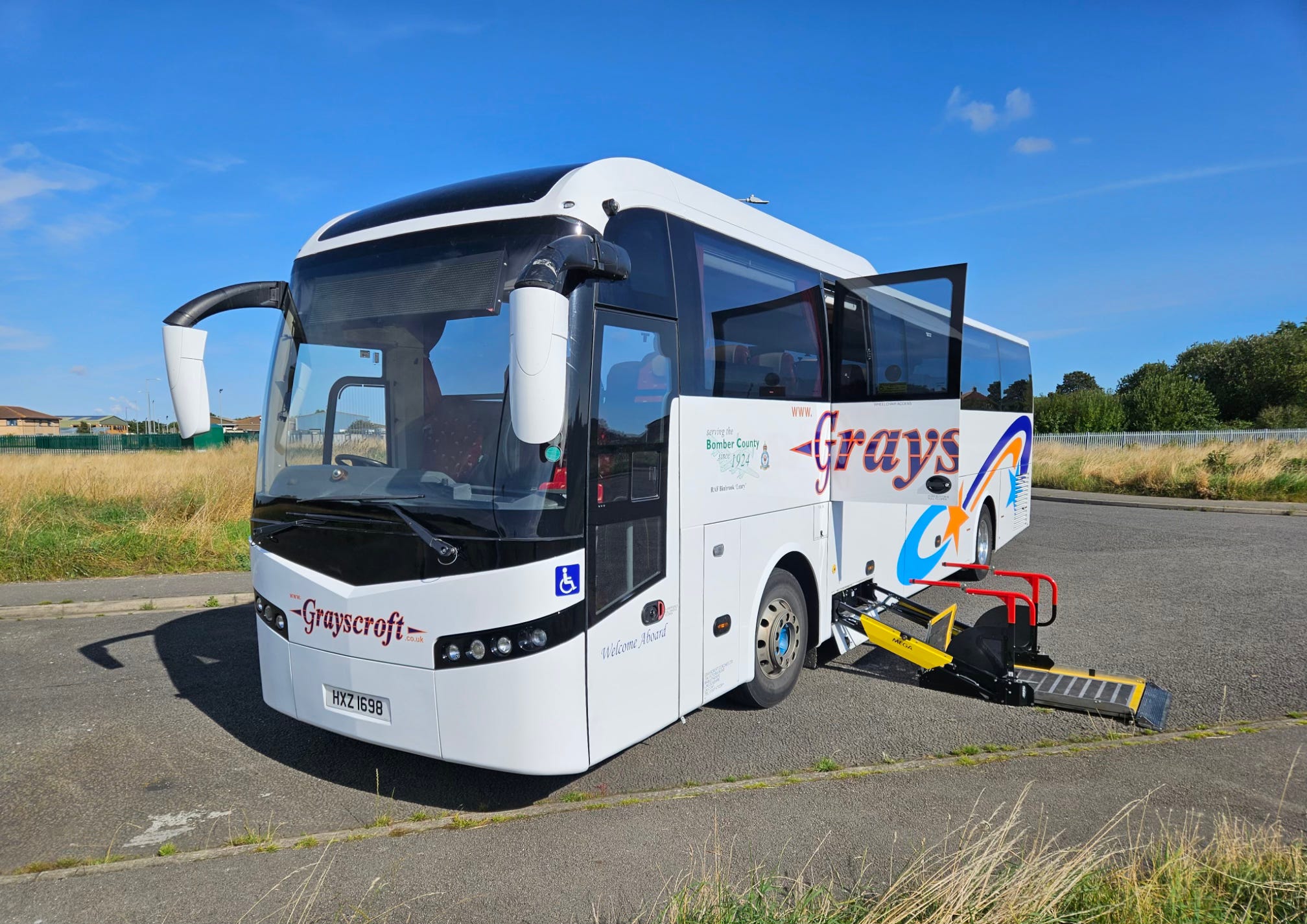
The casual observer could be forgiven for assuming Britain’s buses and trains remain largely inaccessible. In reality, the picture is considerably more nuanced. Walk into any town or city and every scheduled bus will have a low floor, kneeling suspension, and a dedicated wheelchair bay. Every coach on scheduled work for operators such as National Express and Flixbus will be fitted with a powered wheelchair ramp and dedicated space inside. Board any modern train and it will feature accessible toilets, wheelchair spaces, priority seating, contrasting grab rails, audio announcements, visual passenger information systems and call-for-aid equipment.
Britain has not stood still. Quite the opposite. Hundreds of millions of pounds have been invested over the past three decades to comply with increasingly demanding accessibility legislation. So costly has the staged conversion been, that some smaller bus operators have simply ceased trading - unable to fund the necessary investment in newer vehicles.
To be absolutely clear, for buses, trains and coaches providing scheduled, public services, the work is complete.
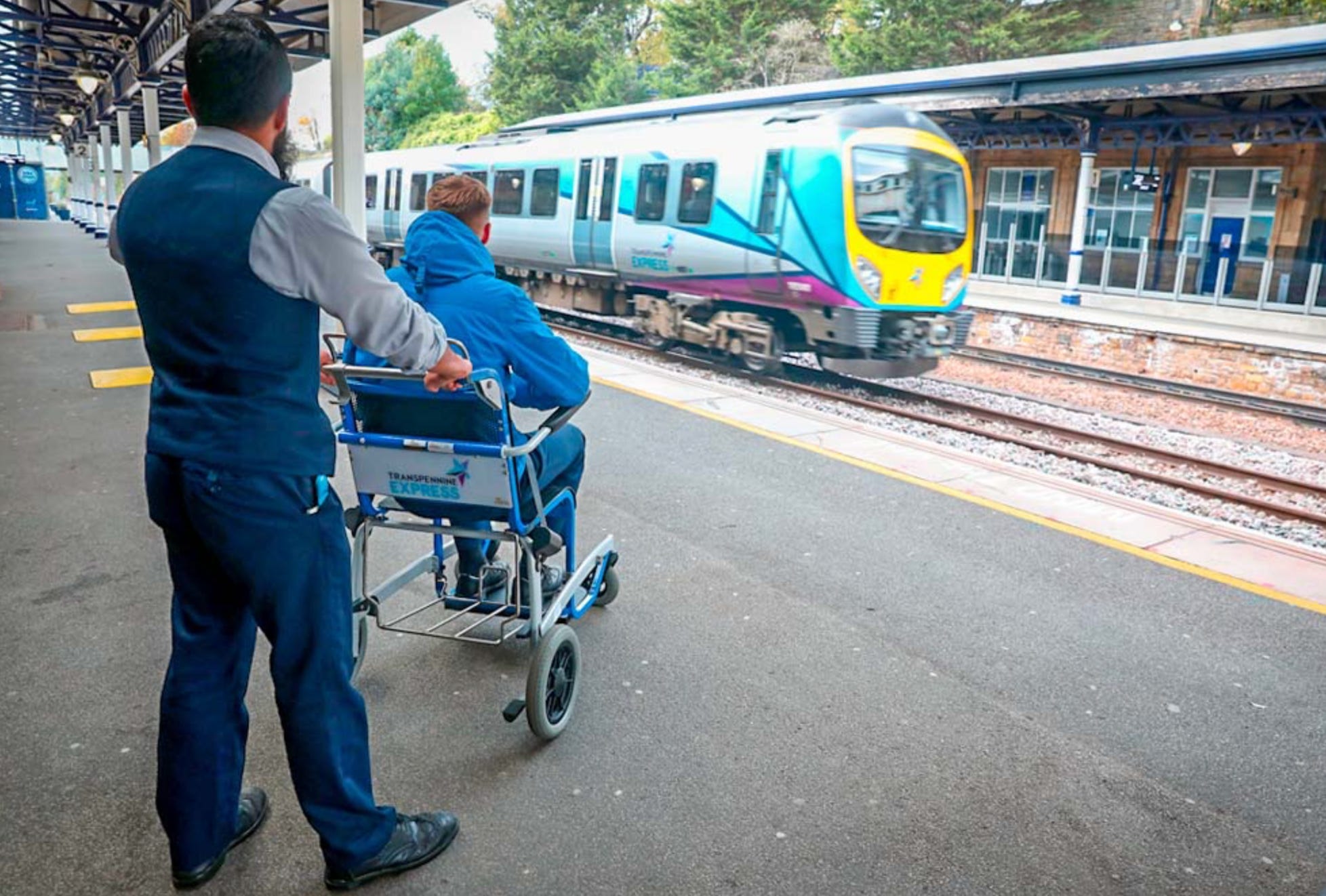
Rather, the greatest barriers today are not the vehicles themselves but the infrastructure in which they operate. Many railway stations still lack step-free access between platforms. Others require lengthy detours involving public roads. Some stations remain connected only by Victorian footbridges, built for an era with rather different expectations of who might be using them. Platform-train gaps vary enormously, making independent boarding impossible at some locations without staff assistance or boarding ramps. Tactile paving remains inconsistent and, although much improved, passenger information during disruption can still leave much to be desired.
This distinction matters, because phrases such as ‘fully accessible transport’ can paint a misleading picture. Campaigners are seldom arguing that buses and trains themselves remain fundamentally inaccessible. Their focus has shifted towards creating an entirely accessible journey from front door to destination. That is an altogether bigger undertaking, and one considerably harder to solve with a press release.
Take a simple rail journey. A wheelchair user may leave an accessible home, travel along a pavement obstructed by parked vehicles, encounter dropped kerbs that have deteriorated, arrive at a station lacking lifts, require assistance boarding the train because of the platform gap, transfer at another station where the lift is out of service, and finally discover that the destination station has no step-free exit.
Every individual element may appear relatively minor. Collectively they become a substantial barrier, and one that no single piece of legislation can dissolve on its own.
The Equality Act 2010 places duties upon service providers to make reasonable adjustments for disabled people. Rail vehicles themselves are governed principally through the Rail Vehicle Accessibility Regulations 2010 and the retained European Persons with Reduced Mobility Technical Specification for Interoperability, while buses have for many years been required to comply with the Public Service Vehicles Accessibility Regulations 2000. Consequently, buses now entering service already meet demanding accessibility standards.
That reality rarely receives much attention. Instead, campaigners increasingly concentrate upon the weakest links in the chain: lifts, ramps, tactile surfaces, wayfinding, station staffing, reliable Passenger Assist arrangements, and consistency across the network. Few would argue against these ambitions. The challenge lies in achieving them within finite budgets and without creating unintended consequences elsewhere. The cost of raising Bamford’s 94m low platform cost the same as a brand new ADL Enviro200MMC single-decker. Imagine now, the cost of correcting accessibility issues at stations along the Poacher Line (Skegness - Nottingham), comprising seven low platforms, three without step-free access and five that can only accommodate two coaches, introducing the risk of the accessible coach being the one it can’t so the passenger cannot alight. Looking solely at raising the low platforms, the cost would exceed £1.5 million alone, based on Bamford’s total.
Perhaps the best illustration concerns rail replacement buses. For many years operators have benefited from a derogation allowing coaches and buses that do not fully comply with ordinary scheduled service accessibility requirements to operate temporary rail replacement services. There was a practical reason for this. Rail replacement work frequently occurs at short notice, or during major engineering possessions involving dozens, sometimes hundreds, of vehicles spread across large geographical areas. The pool of fully compliant accessible buses capable of meeting every requirement has historically been insufficient to cover that kind of demand.
That position changes on 1 August 2026. From that date, rail replacement vehicles are expected to comply with the same accessibility requirements applying to buses operating normal passenger services. The lengthy derogation expires by means of a cliff edge.
On paper, this appears entirely reasonable. Why should a disabled passenger enjoy fewer rights simply because their train has been replaced by a bus? Viewed solely through that lens, the change is difficult to oppose.
Operational reality is rather more complicated. Britain simply does not possess an unlimited fleet of fully compliant accessible buses waiting to undertake rail replacement work. Most rail replacement contracts rely heavily upon independent operators, coach companies and smaller bus businesses assembled at relatively short notice, whose accessible vehicles are working the routes they were bought to run. During periods of major engineering work, particularly over bank holidays, operators already struggle to source sufficient vehicles. Introducing tighter accessibility requirements inevitably reduces the pool available.
The irony is immediately apparent. A policy introduced to improve accessibility may ultimately reduce transport availability altogether.
Imagine a summer Saturday when engineering work affects services towards Skegness or Scarborough. The railway already struggles to provide sufficient capacity on these routes. Holiday traffic is immense. Families, luggage, bicycles and wheelchairs all compete for space. Replacement buses have traditionally supplemented that capacity when engineering work intervenes. If significantly fewer compliant vehicles can now be sourced, services may simply not operate in sufficient numbers.
Nobody benefits from that outcome. Passengers able to walk lose their journey. Wheelchair users lose their journey. Families lose their holiday. Businesses lose customers.
It is true - indeed the law demands - that accessibility rights should never depend upon operational convenience. Equally, though, transport planners cannot conjure compliant vehicles from thin air. This is where theory collides with practice, and where good intentions on paper can produce worse outcomes on the ground.
The report commissioned by the Institution of Mechanical Engineers estimates that fully accessible transport could unlock around 2.8 million additional workers, contributing approximately £176 billion annually to the economy. The arithmetic is straightforward. Whether the underlying assumptions prove achievable is another matter entirely.
Transport undoubtedly prevents some disabled people entering employment. No serious observer disputes that. Equally, transport is rarely the only barrier. Health conditions, caring responsibilities, availability of suitable work, flexible employment opportunities, housing, skills and local labour markets all influence employment participation. Installing lifts at every station would improve opportunities considerably. It would not, however, instantly create 2.8 million additional workers. Figures of that size have a way of travelling further than the caveats attached to them. The new lifts and associated bridge at Spalding railway station, opening in 2021, cost £1.1 million. This was a bargain compared to a similar scheme at Alfreton that opened on July 2025 that cost six times that (and included additional works to the car park).
That should not diminish the value of accessibility improvements. It simply reminds us that complex social challenges rarely possess single solutions, however tidy the headline number.
There is another issue seldom discussed. Accessibility is sometimes presented as though every passenger’s needs exist independently of everybody else’s. Railways do not work like that. Every decision influences capacity. Wheelchair spaces occupy physical space within trains. Accessible toilets require additional room. Boarding assistance increases station dwell times. Longer dwell times affect punctuality. Reduced punctuality influences capacity elsewhere on the network. None of these observations constitute arguments against accessibility. They simply acknowledge that transport involves balancing competing demands, something rarely mentioned in a report designed to produce a single striking figure.
Perhaps nowhere is this clearer than during the summer holiday season. Passengers care little for policy papers or engineering reports. They simply expect to reach work on time. Families travelling towards the Lincolnshire coast want enough room for children, luggage and pushchairs. Wheelchair users expect to travel with dignity and confidence. Railway staff hope the service remains on time despite extraordinary demand. All those expectations are entirely reasonable. Meeting every one simultaneously becomes considerably harder when infrastructure reaches its limits.
Campaigners are therefore correct in identifying accessibility shortcomings. Equally, transport professionals are correct in warning that additional legal obligations must remain deliverable. The true solution has always been more railway. Longer trains. Additional carriages. Platforms capable of accommodating them. Greater resilience during engineering work. More accessible stations. Better staffing. Improved passenger information. That programme requires years rather than months. Until then, difficult compromises remain unavoidable.
The Government has already committed hundreds of millions of pounds towards step-free station schemes, lifts and accessibility improvements. More will undoubtedly follow. The pace, however, inevitably disappoints campaigners. Retrofitting Victorian railway infrastructure is neither simple nor inexpensive. Installing lifts frequently requires substantial structural alterations, bridge strengthening, utility diversions, planning consent and prolonged possessions. Some stations sit within listed structures where alterations prove particularly challenging. Every completed scheme therefore represents years of planning rather than months, whatever the announcement accompanying its funding might suggest.
The same applies to bus infrastructure. Although vehicles themselves are universally accessible, many bus stops remain problematic. Kerbs may be too low for ramps to deploy effectively. Shelters can obstruct wheelchair manoeuvring. Uneven paving presents hazards. Poor parking enforcement leaves buses unable to draw close enough to the kerb. These seemingly mundane issues often determine whether an accessible vehicle can actually be used independently. A low-floor bus is of limited use to a wheelchair user if the ramp cannot deploy onto the kerb it is meant to meet.
Accessibility therefore extends well beyond the bus or train itself. It encompasses the entire journey. That broader perspective deserves support. Equally deserving of support is an honest discussion about practical limitations.
Success will not be measured by impressive economic forecasts or striking headlines. It will be measured by whether an elderly passenger can reach the opposite platform independently, whether a visually impaired traveller receives clear information during disruption, whether a wheelchair user boards without anxiety, and whether the ordinary passenger boarding the 0736 from Hull experiences a railway that simply works.
That remains the standard against which every transport policy should ultimately be judged.
The Lincolnshire & East Yorkshire Transport Review (established 1963) is one of the longest-running publications of its kind in the country. Published every other month, each full-colour, glossy edition offers a detailed overview of the local transport scene, combining the latest news with informed opinion.
We provide in-depth analysis of changes to local bus and rail services, a comprehensive fleet section reporting acquisitions and disposals by all local bus, coach and rail operators, and a range of historical and contemporary articles exploring the rich tapestry of transport across our region.
An annual subscription costs just £15. We also offer a ‘try before you buy’ option—receive the latest edition by post to your home or office for just £3. There is a Rest of the Year option, charged pro rata.
For more information, visit: www.gct113.com/leytr